
I've never really considered Canada a foreign country, not like Germany or Japan or even England. Unlike Mexico, we share a common language (well, except for that "aboot the hoose" stuff) and a common culture. Until last month I had only been in Vancouver on the west end and Niagara Falls on the east end, but the rest of the country is like Vancouver and Niagara, right?
Wrong. Quebec is definitely a foreign country.
Tourists, even American ones, do have to show their passports at the border now, but the border crossing looked pretty non-threatening compared to some of the passport control booths we've had to get through:

However, right away we noticed that they don't use the Queen's English on their signs, including on their stop signs:

Then there was this fellow, standing in the Place d'Armes Square. He definitely looks like he is related to the Three Musketeers:
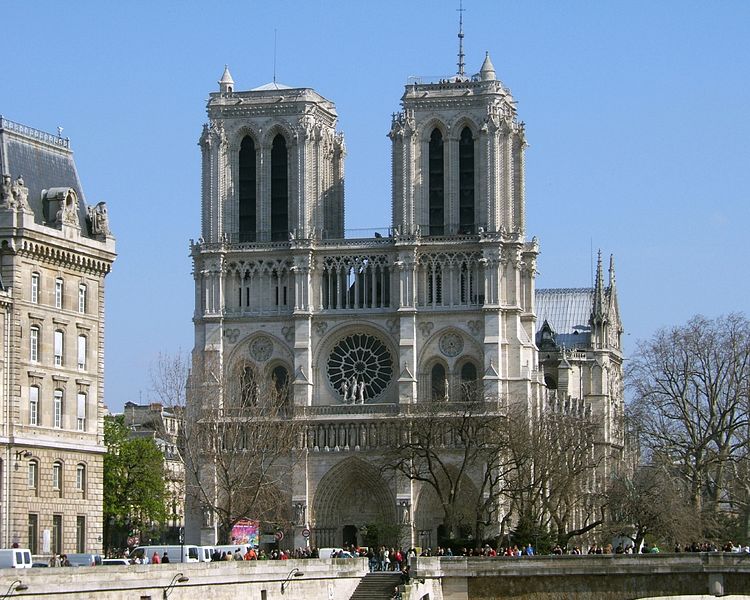
And wait . . . isn't that Notre Dame Basilica identical to the one in PARIS, FRANCE?
Well, maybe not quite. Someone chopped off the tops of the towers in Paris and added a few embellishments:
Montreal's Basilica is quite impressive, and just a bit creepy, especially on a rather Gothic-y weather day:
We were laughing and joking and ooh-ing and ah-ing, and then we went inside, and suddenly we could hardly breathe.
The main room is rather dark, or it least it was on the rainy day we visited, and the blue-painted ceilings and blue lighting give the interior an eerie, almost surreal atmosphere. It has to be the most unique use of color in a cathedral interior that I've ever seen. (By the way, this is where Quebecean icon Celine Dion married Rene Angelil in 1994.)
It's not only the main altar that is so sublime. There are colors and patterns everywhere.


Wrong. Quebec is definitely a foreign country.
Tourists, even American ones, do have to show their passports at the border now, but the border crossing looked pretty non-threatening compared to some of the passport control booths we've had to get through:

However, right away we noticed that they don't use the Queen's English on their signs, including on their stop signs:

 |
| In our travels, we've been surprised by how many countries use the word "stop" rather than the foreign equivalent. |
 |
| Paul Chomeday de Maissonnueve, Founder of Montreal |
 |
| Notre Dame, Montreal |
 |
| Notre Dame, Paris |
 |
When it was completed in 1843, this was the largest church in all of North America.
 |
| Did someone bonk Mary on the head? It looks like she is seeing stars. |
WOW.
You know how they backlight the organ pipes in the Tabernacle in Temple Square? Well, this is kind of like that . . .
. . . only a thousand times more stunning.
The main room is rather dark, or it least it was on the rainy day we visited, and the blue-painted ceilings and blue lighting give the interior an eerie, almost surreal atmosphere. It has to be the most unique use of color in a cathedral interior that I've ever seen. (By the way, this is where Quebecean icon Celine Dion married Rene Angelil in 1994.)
It's not only the main altar that is so sublime. There are colors and patterns everywhere.


 |
| We loved the unique stained-glass windows that portrayed scenes from Canadian history rather than more traditional scenes from the life of Christ. |


The art was also unusual, much of it, like the windows, depicting Montreal's history, both religious and secular. Here is just a small sampling:
Of course, there were plenty of traditional statues of Christ, carved from the warm woods of Canadian forests rather than the cold marble of Italian quarries:


I especially loved this Ezekiel and Jeremiah,:


Because of the monstrous size of the cathedral, it was decided that a smaller, more intimate chapel was needed, and the Chapel of the Sacred Heart was completed just behind Notre Dame in 1888. Tragically, it was destroyed by arson in 1978, but it was quickly rebuilt in a slightly more modern style
The Chapel is accessed from behind the main altar, and a passageway provides a nice, quick transition from the dark glowing blue of the Basilica to a much brighter light:


However, the *gasp* reflex again comes into play upon entering the chapel, which is bathed in yellow light dominated by this equally unique altarpiece:


There are several style elements that provide a bridge to the main basilica, such as the use of this softer version of the blue background:

. . . and the rich wood used for the statues of Christ:

. . . and (here it is!) the intricately-carved spiral staircase:

I love this Neo-Gothic confessional. I'm glad there wasn't a priest around. If there had been, I may not have been able to resist popping in there to confess just for the experience of it.

The chapel was full of people, cameras, and film crews who were preparing some advertising for a Christmas music special later in the year (and yes, that IS a Christmas tree):

Here is the guy from the top row of the poster above being interviewed:

Well, when we were done in there, our energy had been completely sapped and we needed a caloric infusion to get us through the rest of the day. What could we do but search out the bakery recommended to us by our friends the Eastmonds?
 Oh yeah, it was worth the subway ride AND the walk. We ate a couple of delicious paninis and several wonderful salads, but THIS decidedly FOREIGN FOOD is what I really came for:


 While not technically set in Montreal, the Inspector Gamache series by Louise Penny is set on the Canadian side of the US/Quebec border. A friend introduced me to the books via Still Life, the first in the series, and I loved it so much that I can't wait to read the next nine books. The characters are well-developed and remind me of people I know. The plot is full of interesting, unpredictable twists and is intelligent (i.e., the murderer doesn't turn out to be someone who shows up at the last minute, or a character who suddenly develops all the attributes of a murderer). Chief Inspector Gamache is someone I think I'd like to know. What more could a reader ask?
Next up: Even BETTER than Notre Dame Basilica--Saint Joseph's Oratory


