July 2, 2022
As I noted in the last post, we realized that we hadn't really paid attention to where we had parked the car, and so we decided we had better retrace our steps before we went any farther. We knew the more places we went, the less likely we'd be able to remember how to get back to the starting place. By the time we had walked about two blocks and made two turns, we realized we had no idea where to go next. There were so many narrow, twisting alleys and staircases that looked the same. We also disagreed on the general direction to go to find the car. I was sure it was one direction, and Bob was convinced it was another. We had no real landmarks in mind. We were in serious trouble.
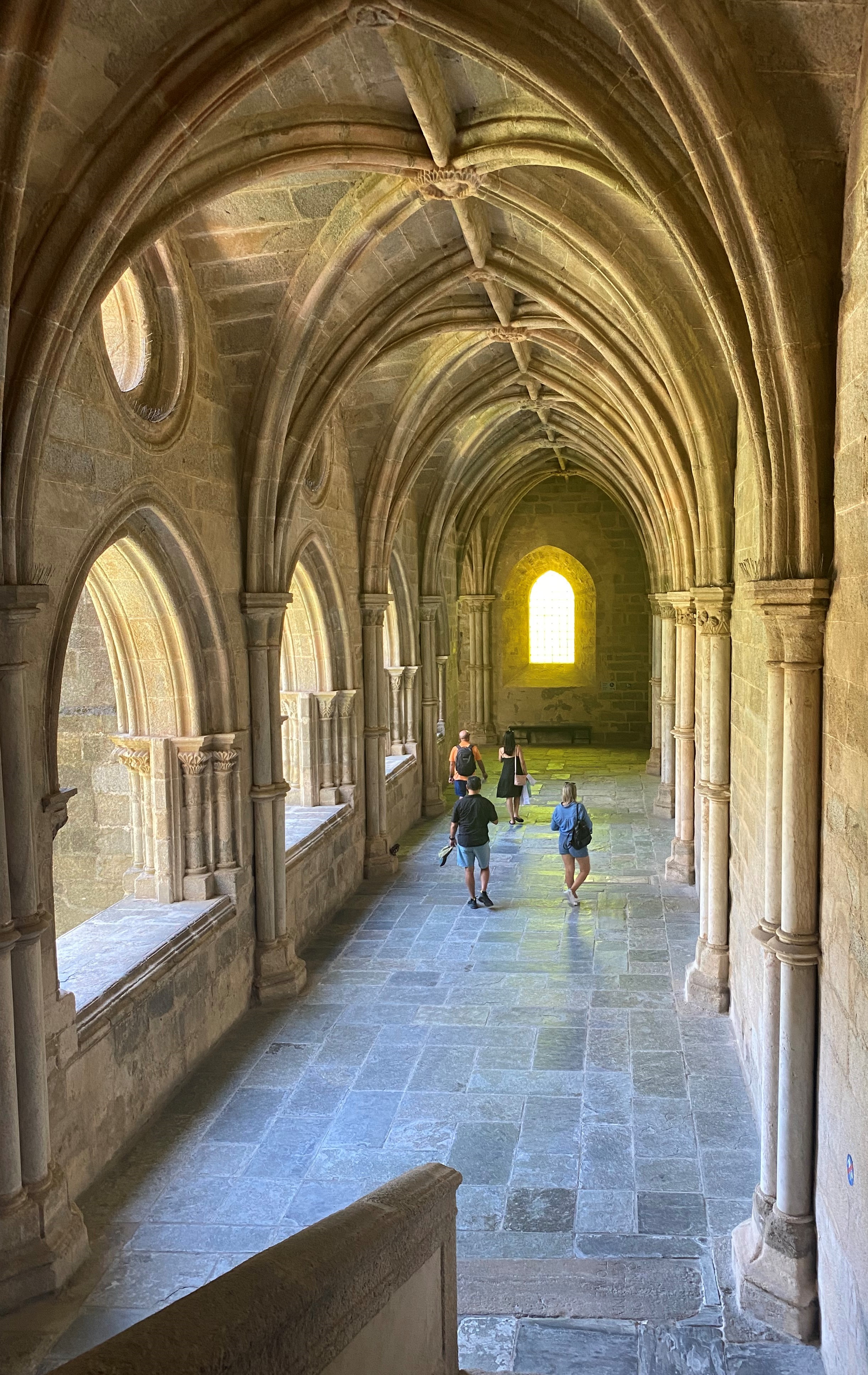
However, in our wanderings, we did come across several other sites on our list, starting with the mid-gothic Cathedral of Évora, the oldest and largest medieval cathedral in Portugal. Construction started in the 12th century and was completed in the 14th century, although significant changes and additions were made up until the early 1700s. This cathedral is one of the structures cited in the UNESCO World Heritage Site designation for Évora.
A few years ago I read the book
The Cloister Walk by Kathleen Norris, which tells of the author's experience living in a Benedictine monastery for nine months. I think of her quiet, soul-searching prose every time we stroll down a cloister walkway, and somehow at the Évora Cathedral the laughter of running children made this particular experience that much more spiritual.
Off the cloister is a funeral chapel that contains the tomb of the cathedral's founder, Bishop King Peter, as well as the Archbishop of Évora who died in the 20th century. (However, I am not sure if I have these labeled correctly because there are also a few other tombs connected to the cloister.)






.JPG)


