Amsterdam is an interesting blend of old and new, modern and traditional, ornate and humble. To illustrate, I've chosen two contrasting "places to stay" and two contrasting churches.
FIRST, TWO PLACES TO STAY
I don't usually blog about our hotels, but we stayed in one so unique in Amsterdam that it deserves mention here. After scouring TripAdvisor, Hotels.com, and other sites, we settled on citizenM Hotel. The price was right and the reviews were extremely good. While it isn't in the downtown tourist area, it is located just a few blocks from the train station and right on the main bus line.
CitizenM is by far the most unique hotel we have ever stayed in. It is made of shipping-container sized rooms, put together off-site and basically stacked atop each other during construction. Below is a photo of a photograph of citizenM Amsterdam that was hanging in the hotel. I think some of the guests should close their blinds, don't you?

The rooms are tiny but incredibly well designed. There is a wall-to-wall king-sized bed at the far end under an equally large window.

To get there, you have to weave through the "bathroom," a toilet area and a shower that each have a circular glass enclosure. (This is not a room to share with someone you are not very comfortable with.)
 There are lots of fun touches, like a "mood pad" that controls the TV, window blinds, temperature, wake up alarm, and lighting. You can even turn the room purple or orange or whatever other color fits the mood you are in. Even the toiletries have a unique style:
 The hallways continue the world traveler theme:
 Quotes about travel are painted on the door panels:


 Pretty fun.
There can hardly be a bigger contrast to citizenM than the Anne Frank House, also located in Amsterdam.
 When we were there, the line to get in snaked around the block. We had been told that a special mutli-attraction ticket we bought would get us right in, but we couldn't figure out where to go to make that happen. After standing in line a while, we realized that we were in the wrong line and went to another line. Turns out we had been in the right line, and we had to go back to the original line, but to the end, effectively doubling an already long wait.
Once we finally made it inside, I pulled out my camera and had taken several pictures before I was sternly told that photography was not permitted. Here are a few of my pilfered photos:

 It was exciting to see the real diary, and later to see the attic rooms where Anne and her family lived for two years before being discovered and shipped off to concentration camps. While it was definitely not the citizenM, I was surprised by how large the living space in the hidden annex was. I wish I could have taken more pictures, but there are a lot of good pictures on the internet. (For example, see here and here.)
One other thing I got a picture of before I was shut down was the display telling about the 1959 movie The Diary of Anne Frank, which won three Oscars.
 Shelley Winters, who won the Best Supporting Actress Oscar for her portrayal of Mrs. Van Daan, donated her statue to the museum:
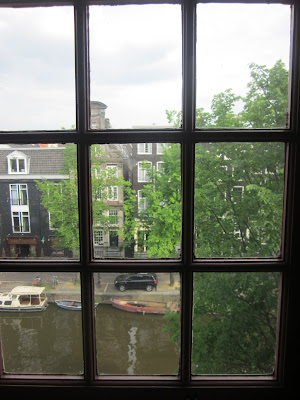
 The view from the window of the upper story of the house is beautiful. I wonder how much of this Anne was able to see?

SECOND, TWO CHURCHES
Like all European cities, Amsterdam has many churches. Nieuwe Kerk (or "New Church") is a 15th century church located on Dam Square and is only used as a church for important state events, such as weddings or investitures.


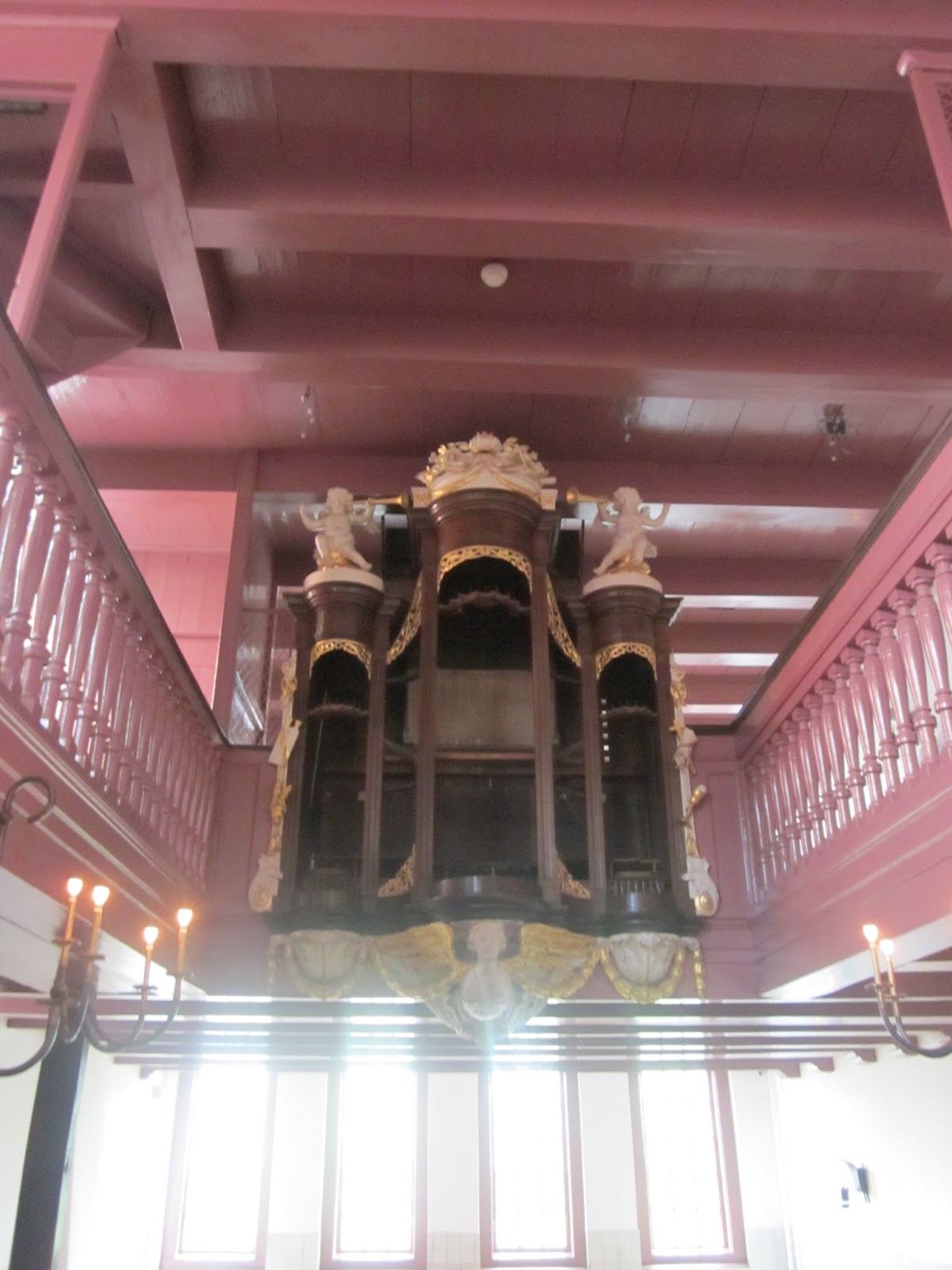
 In contrast to the richly ornate Nieuwe Kerk, the humble "Our Lord in the Attic Church" takes up the top three floors of a row house. It was built in the 1660s during a period when Catholicism was illegal in Holland. When Catholics were finally allowed to build a regular church in the 1880s and worship openly, this attic church was turned into a museum, making it the oldest museum in the city.
Its quiet intimacy was very appealing after all the huge cathedrals we had visited during the previous two weeks, and the hidden rooms were eerily similar to those in the Anne Frank house.



FIRST, TWO PLACES TO STAY
I don't usually blog about our hotels, but we stayed in one so unique in Amsterdam that it deserves mention here. After scouring TripAdvisor, Hotels.com, and other sites, we settled on citizenM Hotel. The price was right and the reviews were extremely good. While it isn't in the downtown tourist area, it is located just a few blocks from the train station and right on the main bus line.
 |
| (Internet photo) |

The rooms are tiny but incredibly well designed. There is a wall-to-wall king-sized bed at the far end under an equally large window.

To get there, you have to weave through the "bathroom," a toilet area and a shower that each have a circular glass enclosure. (This is not a room to share with someone you are not very comfortable with.)


There can hardly be a bigger contrast to citizenM than the Anne Frank House, also located in Amsterdam.

Once we finally made it inside, I pulled out my camera and had taken several pictures before I was sternly told that photography was not permitted. Here are a few of my pilfered photos:


One other thing I got a picture of before I was shut down was the display telling about the 1959 movie The Diary of Anne Frank, which won three Oscars.


SECOND, TWO CHURCHES
Like all European cities, Amsterdam has many churches. Nieuwe Kerk (or "New Church") is a 15th century church located on Dam Square and is only used as a church for important state events, such as weddings or investitures.


Nieuwe Kerk is the burial site of some famous Dutchmen, including Michiel de Ruyter (1607-1676), the country's most famous naval officer:


 In contrast to the richly ornate Nieuwe Kerk, the humble "Our Lord in the Attic Church" takes up the top three floors of a row house. It was built in the 1660s during a period when Catholicism was illegal in Holland. When Catholics were finally allowed to build a regular church in the 1880s and worship openly, this attic church was turned into a museum, making it the oldest museum in the city.
Its quiet intimacy was very appealing after all the huge cathedrals we had visited during the previous two weeks, and the hidden rooms were eerily similar to those in the Anne Frank house.


 |
| Floorboards |


The confessional:


COMING UP: One final post on Amsterdam, including food, Judaism, and the Flower Market.