Showing posts with label Portugal. Show all posts

Wednesday, February 22, 2023

PORTUGAL: SADO ESTUARY, LDS TEMPLE, AND A LONG TRIP HOME

 July 3, 2022

On our last day in Portugal we met up again with Bernard, our friendly bird guide, in the Sado Estuary, an area of wetlands known for its many species of birds. 

We drove around for a while looking for birds. We saw a flock of flamingoes, but they were old hat at this point.

There wasn't anything too exciting, so we stopped at a small education center that Bernard told us children visit on school trips. 

The pathway up to the building was lined with fun bird sculptures.


Tuesday, February 14, 2023

PORTUGAL: EVORA, PART II - EVORA CATHEDRAL, ROMAN RUINS, A LOST CAR, AND DINNER AT TABERNA TIPICA

 July 2, 2022

As I noted in the last post, we realized that we hadn't really paid attention to where we had parked the car, and so we decided we had better retrace our steps before we went any farther. We knew the more places we went, the less likely we'd be able to remember how to get back to the starting place. By the time we had walked about two blocks and made two turns, we realized we had no idea where to go next. There were so many narrow, twisting alleys and staircases that looked the same. We also disagreed on the general direction to go to find the car. I was sure it was one direction, and Bob was convinced it was another. We had no real landmarks in mind. We were in serious trouble.

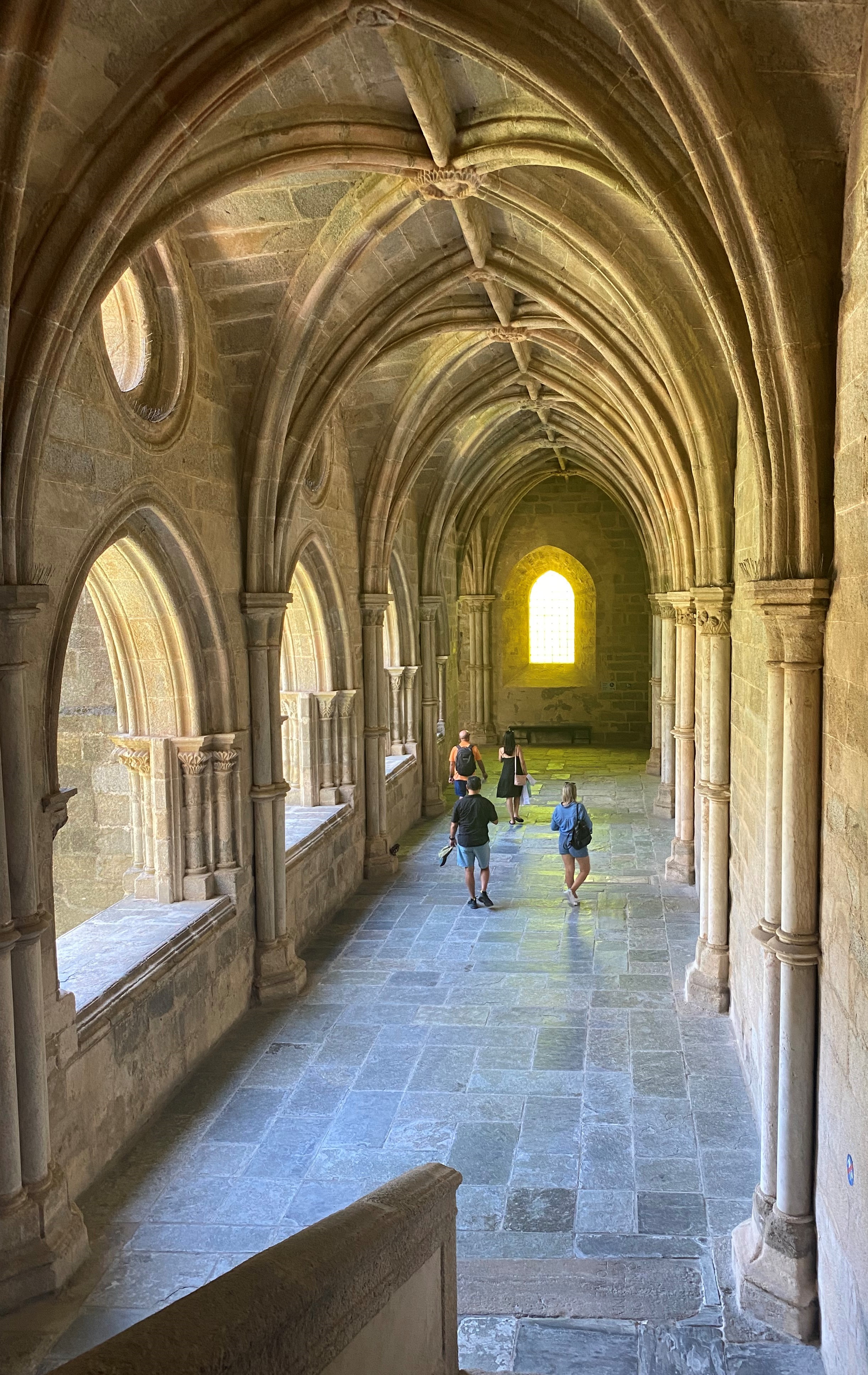
However, in our wanderings, we did come across several other sites on our list, starting with the mid-gothic Cathedral of Évora, the oldest and largest medieval cathedral in Portugal. Construction started in the 12th century and was completed in the 14th century, although significant changes and additions were made up until the early 1700s. This cathedral is one of the structures cited in the UNESCO World Heritage Site designation for Évora.


A few years ago I read the book The Cloister Walk by Kathleen Norris, which tells of the author's experience living in a Benedictine monastery for nine months. I think of her quiet, soul-searching prose every time we stroll down a cloister walkway, and somehow at the Évora Cathedral the laughter of running children made this particular experience that much more spiritual.


Off the cloister is a funeral chapel that contains the tomb of the cathedral's founder, Bishop King Peter, as well as the Archbishop of Évora who died in the 20th century. (However, I am not sure if I have these labeled correctly because there are also a few other tombs connected to the cloister.)


Thursday, February 9, 2023

PORTUGAL: EVORA, PART I - ST. FRANCES CHURCH

 July 2, 2022

Évora, yet another UNESCO World Heritage Site, was the last city on our list before returning to Lisbon, and there were a lot of things we wanted to see there. However, most of them were closed between 12:00 and 2:00 PM,  so after parking our car we took a crazy, zig-zagging 12-minute walk through streets, alleys, and staircases, guided by the GPS on our phone.

We arrived at the Igreja São Francisco, or the St. Francis Church, not quite sure how we had gotten there.


Built between 1475 and 1550, it is a huge Gothic church--although it doesn't look very Gothic on the outside, and the inside has Renaissance and Baroque styles as well. The vaulted nave is the largest of its kind in Portugal.

The main altar includes an impressive "wedding cake Jesus" crucifix.


Wednesday, February 1, 2023

PORTUGAL: SLEEPING IN FATIMA AND A TRIP TO ESTREMOZ

  July 1-2, 2022

After a long day of sightseeing, we were ready to dump our stuff at our hotel, grab a bite to eat, and go to bed. The only problem was that we couldn't find our hotel, the SDivine Fatima Hotel. Our GPS placed in in the center of a roundabout. We had to call the hotel twice for directions. We finally found it just off the roundabout on one of the many exits, but set back from the road with no visible signage.

We were still in the city of Fátima, and it was fun to see this azulejo depiction of the Visitation of Our Lady of the Rosary to the three shepherd children.

After unloading our luggage, we set out on foot to find something to eat. The only thing we found open was a butcher shop that made sandwiches and "toasts," or grilled sandwiches (kind of like paninis). The guy behind the counter spoke as much English as I spoke Portuguese, so we had a pretty funny pantomime exchange. He gave us some meat and cheese samples to try, and we pointed at what we wanted. When Bob asked for mayonnaise for his sandwich, the butcher was horrififed, basically refusing. The sandwiches were good, at least my toastsed one with melted cheese oozing out the sides was!

We also shared some very good sausage and olives.

The next day we got off to an early start because we planned to cover a significant distance.

Wednesday, January 25, 2023

PORTUGAL: SANCTUARY OF OUR LADY OF FATIMA

 July 1, 2022

Our final destination of the day was our third pilgrimage site of the trip (the first two being Santiago de Compostela and Bom Jesus Cathedral), The Sanctuary of Our Lady of Fátima.


The story is that in 1917, Mary the Mother of Jesus appeared to three shepherd children--Francisco and Jacinta Marto and their cousin Lúcia--in a field in Fátima, Portugal. Over a period of five months, the children experienced six visitations. They told others that they were asked by the Virgin to say the rosary and were told three "secrets" regarding events that were to occur. In 1930, the Catholic Church recognized the visions as "worthy of belief" and granted a papal indulgence to pilgrims to the site. The site quickly became an important pilgrimage destination, and it now receives as many as six million pilgrims a year. 

The huge open courtyard of the shrine is twice as large as St. Peter's in Rome, and it reminded us a lot of the Shrine of the Virgin of Guadalupe in Mexico City that we visited in 2018. The Shrine of Fátima, built near the place where the children saw Mary, is one of the largest Marian shrines in the world.

There are two minor basilicas on the property, and we began our visit in the Basilica of Our Lady of the Rosary, which has a 213-foot-tall tower topped with a 15,000-pound bronze crown and a cross.


Tuesday, January 17, 2023

PORTUGAL: GUIMARAES PALACE AND CASTLE AND AN OCTOPUS LUNCH

 July 1, 2022

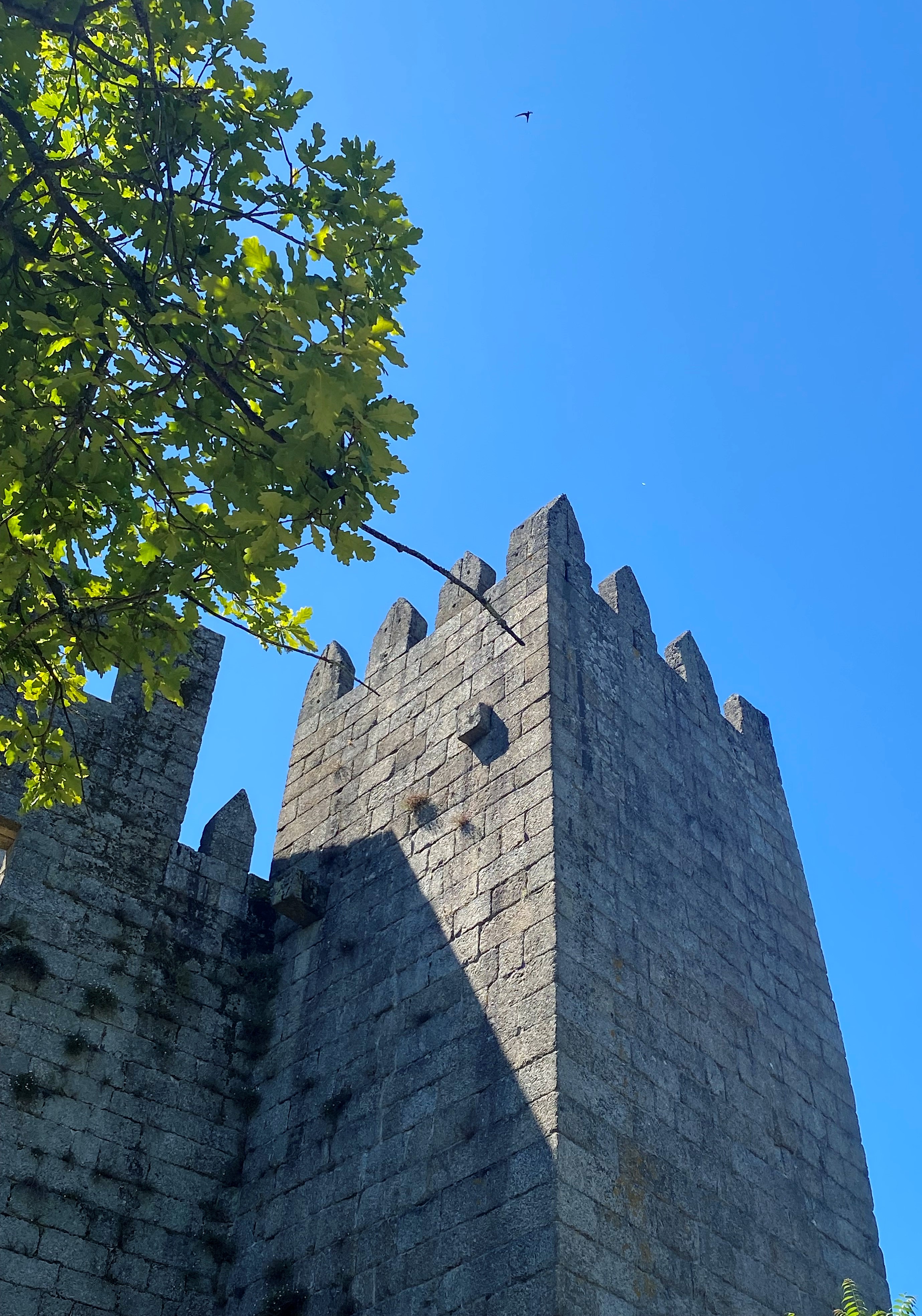
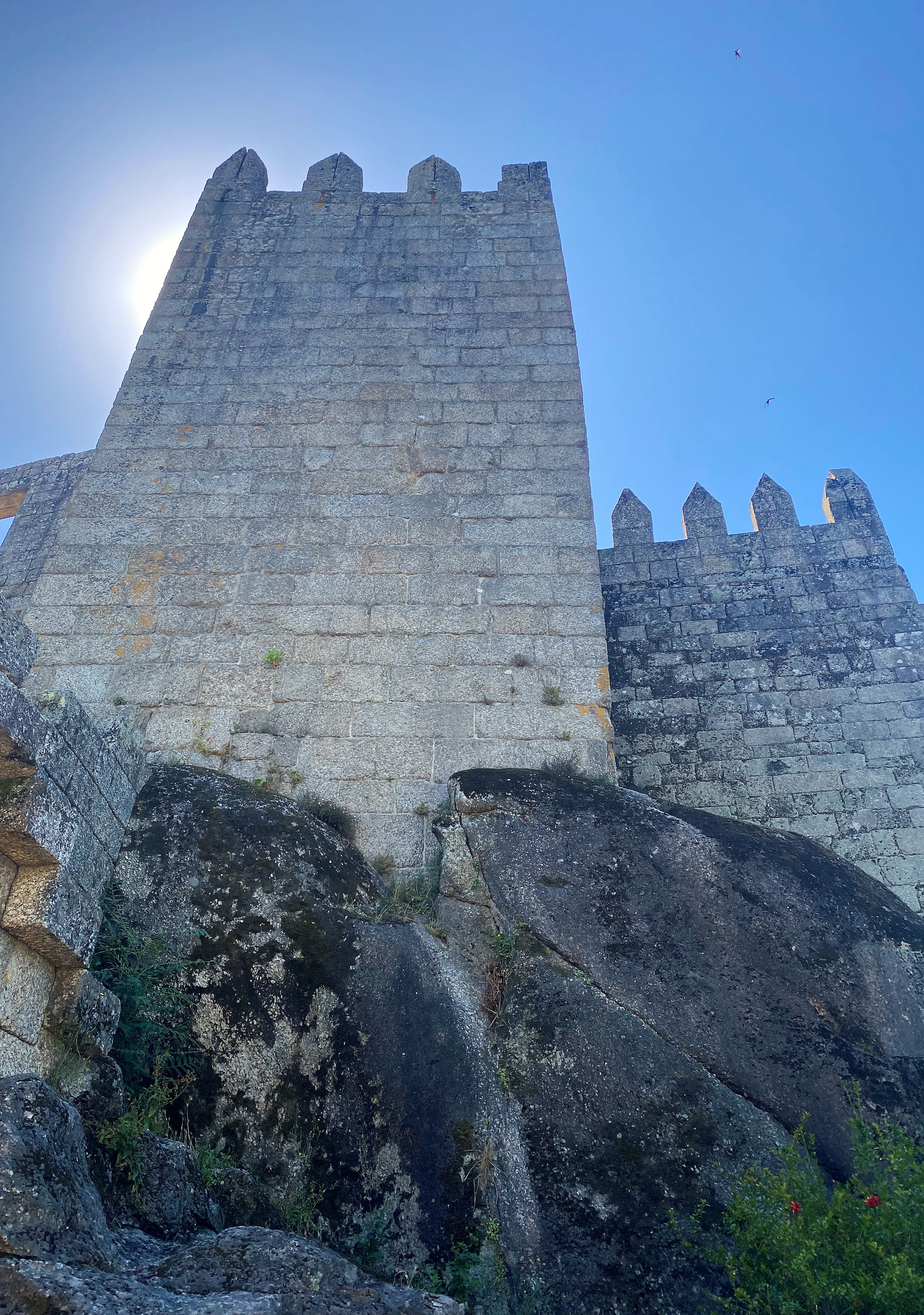
Our next stop was Guimaraes, another UNESCO World Heritage Site. We spent several hours on the grounds of Guimaraes Castle, the place where the first King of Portugal, Afonso Henriques (1109-1185) was born. Construction began in the mid-10th century. Obviously, it has had a few renovations since then.


We walked past it on the right side . . . 

. . . admiring its square, crenellated tower and the way it is literally built into the rocks.

Tuesday, January 10, 2023

PORTUGAL: BRAGA

July 1, 2022

Our Braga accommodations, the Hotel Vila Galé, was about a five-mile drive from the Bom Jesus Basilica. At first we couldn't find it. The address led us to this building, which was clearly (we thought), a church and not a hotel:


Eventually, however, we noticed the hotel signs on the right end of the building.

We learned that our hotel was occupying a site that was originally the Hospital de São Marcos, established in the 1500s--similar in some ways to our hotel in Santiago de Compostela, Spain. The Iberian people built incredible hospitals! The original building was expanded a few times over the centuries, and the building as it now appears served as a public hospital with a capacity of 521 active beds in 2007. It was vacated in 2011 in favor of a new, modern structure. In 2016 the Via Galé hotel group purchased the building, and in 2018 it opened as a four-star hotel. 

The hotel is enormous. Once we checked in at the front desk, we walked through a series of corridors for almost five minutes before reaching our room.


Friday, January 6, 2023

PORTUGAL: BOM JESUS DO MONTE BASILICA

 June 30, 2022

We got on the road around noon for our two-hour drive back to Portugal and our next destination outside Braga, another pilgrimage site, Bom Jesus do Monte, or "Good Jesus of the Mountain." (We kept irreverently calling the place "Bomb Jesus" and giggling.)

We had eaten an extensive and delicious breakfast buffet in our hotel, so we weren't ready for lunch, but we did pick up some nutritious snacks for the drive. I didn't know Magnum made anything but ice cream bars! What a wonderful surprise! And the Sumol Laranja drink on the right tastes just like one of my favorites: Orangina.


We had zero interference crossing the border into Portugal. Everything we had read online about tight Covid restrictions in Portugal were either out-of-date or overblown.

Bom Jesus do Monte turned out to be one of my favorite churches in Portugal, in spite of the fact that the road to the church is a series of hairpin turns up a very steep mountain.

Declared a UNESCO World Heritage Site in 2019, the extensive property (64 acres) is stunning. The UNESCO document notes that "the landscape evokes Christian Jerusalem, recreating a sacred mount crowned with a church. . . . [It] illustrates a European tradition of creating Sacri Monti (sacred mountains), promoted by the Catholic Church at the Council of Trent in the 16th century." The rest of the UNESCO description is one of the most lavish documents of praise I have read on their site, and I wonder what took them so long to name Bom Jesus a World Heritage Site. 

Many churches have existed here, beginning in the 14th century, but the current  one was started in 1784 and consecrated in 1834. A zig-zagging series of 577 steps leading from the town of Braga up the mountain to the basilica were built between 1723 and 1837, and it is these stairs and accompanying artwork and landscaping that make the basilica such a special and unique place, which is why over 1.2 million people visit it every year.


Monday, November 28, 2022

PORTUGAL: PORTO, PART IV - ORDEM DO CARMO AND RIBEIRA

 June 28, 2022

We were nearing the end of our crazy, too-fast day in Porto, but we still had a couple of places on our list.

The first was Ordem do Carmo, or the Order of Carmo, a rococo church built between 1756 and 1768 as a convent for the Carmelite Order of the Roman Catholic Church. 

Like several other churches we saw in Porto, the exterior walls are covered in blue tiles that are not original to the structure but added in 1916.

 In this case, the tiles depict the history of the Carmelites.

Monday, November 21, 2022

PORTUGAL: PORTO, PART III - CAPELA DAS ALMAS, IGREJA DE SANTO ILDEFONSO, MAJESTIC CAFE

 June 28, 2022

After lunch we made our way back to the more interesting part of town. When we passed the church on the left, I thought, Wow, how beautiful is that! But then we came up on the church on the right, Capela das Almas (Chapel of Souls). Oh. My. Goodness. 

Yeah, take a look at those tiles. How can you not be overwhelmed at the first site of THIS?


Wednesday, November 16, 2022

PORTUGAL: PORTO, PART II - CATHEDRAL, CLERIGOS CHURCH AND BELLTOWER, AND A LUNCH DETOUR

 June 28, 2022

The Portuguese word Sé is used to mean "cathedral" or a diocese with a bishop. Typically, the word Sé is reserved for the main or ruling church of the community. 

We could see the Romanesque Sé do Porto, located on a hill in the middle of the historical city center, from all over town. 


On our way there, we passed the Fountain of Mouzinho da Silveira, built in 1875 as a monument to a Portuguese statesman who died in 1849. This landmark was dismantled in 1920 to make room for two businesses. In 1966, however, the businesses were gone and the fountain was reconstructed after a model of the original one. I'll bet it is beautiful when it has water in it (if it ever does).

Did you notice the cool reflection on the vehicle in the lower left corner of the photo above?

Tuesday, November 8, 2022

PORTUGAL: PORTO, PART 1 -- SAO BENTO TRAIN STATION, PALACIO DA BOLSA, IGREJA DE SAO FRANCISCO

 Tuesday, June 28, 2022

We got up early and drove just under two hours to Porto, a city I was very excited about. According to many sites, it is loaded with interesting things to see and one of the best places to visit in Portugal.

However, once we got to the city, it took us almost two hours to get to our hotel because of construction in the area. We called the hotel twice for advice for how to get there because our GPS kept sending us to the construction zone and blocked streets. When we finally found a way around the mess, we had to park our car several blocks from the hotel in a parking garage. 

The street on the left (as seen from our hotel room) is the way GPS really wanted us to access the hotel, but the street on the right is the way we were finally able to come in. It was blocked off to cars, but they let us in to unload and then sent us away to park.

And then Bob forgot to grab his camera, and I left my sweater, and we our nerves were already frayed by the driving, and both of us were unhappy.

The huge delay meant that we got to the first place on our list 2.5 hours behind schedule, and it felt like we were playing catch-up all day, speeding from venue to venue. It was a great disappointment for me. Porto is a city where "meandering" would be fun. We did very little of that.

However, the very first place we took a look at was NOT on the schedule--the São Bento (St. Benedict) Train Station, built in the early 1900s. About 20,000 exquisite azulejos cover the walls and are topped by a border of polychromatic tiles. Together they tell the story of Portugal's past.