Showing posts with label palace. Show all posts

Tuesday, January 6, 2026

GERMANY: HITLER'S MUNICH

 May 25, 2025

Our very last joint activity on our family trip to Germany was a guided tour of Hitler's Munich. But before I get to that, I just have to throw in this photo of a silver lion that we passed in the Old Town square. Munich has several statues of lions, once a symbol of Bavarian strength. Besides the Old Town Square, they can be found flanking the entrance to the Munich Palace, on the top of the triumphal arch, and at the Lowenbrau Brewery. My high school mascot was a lion, and I'm a big fan of the books The Wizard of Oz and The Lion, the Witch, and the Wardrobe, both of which prominently feature a lion, so I am always drawn to statues of lions. This one looks powerful. I like it!


Munich is considered the birthplace of the Nazi Party (aka National Socialism or NSDAP), and a visit to Munich is not complete without seeing a few of the sites involved with the Nazi Party, especially in the 1920s and 1930s.

Our first stop on the tour was the Hofbrauhaus, a historic beer hall that started as a supplier for the Bavarian court. 

Our guide took us up a long stairway . . .

. . . to this dining hall. It was here in February 1920 (so early!) that 30-year-old Hitler, the propaganda chief of the National Socialist Party, announced the party's official program to a gathering of about 2,000 people. Seventeen months later, on July 29, 1921, he was elected to be the head of the Nazi Party here.

Friday, December 19, 2025

GERMANY: MAULBRONN MONASTERY AND NYMPHENBURG PALACE

May 24, 2025

Maulbronn is a small town of 6,700 people in southern Germany about 12 miles north of Pforzheim. Legend has it that in the 12th century, wandering monks followed a mule looking for water into the valley. (The name Maulbronn means "mule fountain.") Finding a beautiful lake, the monks settled here and established a monastery. Now a UNESCO World Heritage Site, the monastery draws about a quarter million tourists every year.

For being so old, it is in amazing condition and is, in fact, one of the best-preserved monastic sites in Europe. It's also surprisingly large.


Half-timbered building near the entrance

Granary building, early 13th century

Monday, August 4, 2025

INDIA, JAIPUR: JANTAR MANTAR, THE CITY PALACE OF JAIPUR, AND GOING HOME

 December 30, 2025

Driving through the urban areas of India is always interesting. I find myself wishing I could see these buildings when they were new, and I wonder who has lived in them and what stories they can tell.


The same goes for the people. Their lives are so different than ours, and yet we find common ground when we talk with them. It is hard for me to envision living in their shoes.

In Jaipur, there was beauty of some kind on every corner.

There was also plenty that made us smile, like this anti-drinking-and-driving signage.

We had a new guide, and our first destination of the morning was the Jantar Mantar, an observatory completed in 1734. 

Friday, August 1, 2025

INDIA, JAIPUR: CITY TOUR

  December 29, 2025

We don't usually believe in quitting while the sun is still shining, so we ended the day with a city tour of Jaipur, led by a new guide booked through Audley Travel. His day job is teaching high school, and he was great!

Jaipur, by the way, is the capital and largest city in the northwestern state of Rajasthan. With a population of over three million, it is also the 10th largest city in the entire country. It is known as the "Pink City" due to the dominant pink color of the buildings in the old city. Along with Delhi and Agra, it is part of what is known as the "Golden Triangle" tourist circuit.

Jaipur appears in popular western culture. Paul McCartney wrote a song entitled "Riding into Jaipur" that is mostly Indian-themed sitar music with just a few words: "Riding into Jaipur, Riding through the night, Riding with my baby, Oh what a delight."  The city is also the setting for the 2011 movie The Best Exotic Marigold Hotel and its 2015 sequel, The Second Best Exotic Marigold Hotel.

We began at the Hawa Mahal, or "Palace of Winds," built in 1799 from red and pink sandstone by the grandson of the founder of the city. The palace has 953 windows. The iconic view that we saw is actually the BACK of the palace!


It's always good to start off with a snack (or two), and our guide waited in line for this fried something  (I can't remember what), served to us on a used page from a child's workbook, and then another treat served on a leaf. 


Monday, July 28, 2025

INDIA, JAIPUR: THE SAMODE HAVELI HERITAGE HOTEL AND THE AMBER FORT

 December 29, 2024

It is about 150 miles from Agra to Jaipur via Fatehpur Sikri, and altogether the drive took us almost five hours. Again, we were so glad we had a large van with AC and a very experienced driver. By the time we arrived at our hotel, we were worn out and the day was pretty much over.

Bob had booked rooms in a five-star hotel, the Samode Haveli, which was initially built in the 16th century as a fort but was converted into a palace in the early 19th century by Samode Haveli, the Prime Minister of Jaipur. In 1987 it was converted again, but this time into what is called a "Heritage Hotel," which is a building that has historical or architectural significance and has been made into a hotel. Heritage hotels are usually tied in some way to royalty, nobility, or prominent families.


It is gorgeous inside, but the hallways are a maze and we got lost a couple of times on our first day there. It was a little like wandering the back alleys of Delhi, but on a very grand scale!


Thursday, July 10, 2025

INDIA: BACK TO DELHI AND ON TO AGRA'S RED FORT

 December 26-27, 2024

Our next destination was Agra, home to the world-renowned Taj Majal, but to get there from Varanasi we had to fly to Delhi, spend the night, then sit four hours in a minivan to drive 150 miles, which gives you an idea of what the roads are like in India.

Fortunately, we had another luxury stay in Delhi in the Marriott Hotel. It wins the prize for the most beautiful lobby.


I was intrigued by this Christmas display with a griffin in the center, but I have since learned that the griffin is the Marriott Hotel's custom logo found in their hotels throughout the world.

Like almost all of our upper-end hotels, this one had a doorman in traditional dress. I don't know if this is a British colonial thing or a truly Indian culture thing. I suspect it is the former.

About half-way through the long drive we made a bathroom and snack stop.  I like how this bathrooms are labeled "Public Conveniences." 

KFC, Pizza Hut, and Subway are regular fast food places in India. No thanks. I grabbed something (I can't remember what) from the Indian fast food restaurant Vaango!

We arrived at the Agra Fort (aka Red Fort) in the early afternoon. I think it was the most spectacular thing we had seen up until this point in our trip. The initial stages of the fort were built in the early 1500s, and it was the main residence of the Mughal emperors from the time of its construction until 1638, which is when the capital was shifted from Agra to Delhi. It is where the most famous Mughal emperors, Humayun and Akbar, were crowned in 1565 and 1573, respectively. (It was Akbar's grandson who built the Taj Mahal just 1.6 miles from this site in 1648.) The Agra Fort was designated a UNESCO World Heritage Site in 1983.

Thursday, April 4, 2024

FRANCE 2000: CHARTRES AND VERSAILLES

 December 24, 2000

It was Christmas Eve AND Sunday and we were not sure what would be open, but we began our day by driving to Chartres to see its massive Gothic cathedral, built mostly between 1193 and 1250 and with additions as recent as the 17th century. Considered to be one of the most beautiful cathedrals in Europe, it was added to the UNESCO World Heritage Sites in 1979.

The story is told that during World War II, the city itself was heavily bombed in August 1944. An order was given to destroy the cathedral as it was thought to be in use by the Germans as an observation post. An American army officer named Colonel Welborn Barton Griffith, Jr., challenged the order, volunteering to go behind enemy lines to investigate. He entered the cathedral and after searching it from the crypt to the bell tower, declared it free of Germans by ringing the bell and waving an American flag from the tower. The cathedral was spared. Tragically, Colonel Griffith was killed in action later on that day a few miles north of the city. Posthumous medals and awards from both the US and France are not enough to recognize his bravery and foresight.  (Photo from Wikipedia)

Unlike many of the other cathedrals of Europe, the stained glass windows also survived the war. When the war started in 1939, master glass artisans dismantled hundreds of the precious stained glass windows, and with the help of local volunteers, packaged the windows in crates and stored them in the crypt. Just before German invaders reached the area, the French people hauled them across the country to be stored in an underground quarry. In August 1944, bombs blew out the cathedral's temporary windows.

The cathedral is massive--430 feet long and 151 feet wide with a nave height of 121 feet. It covers 117,060 square feet. The two towers are 344 and 371 feet.  

Wednesday, February 28, 2024

AUSTRIA 2000: SALZBURG

  December 18-19, 2000

Mom was excited to take us to Salzburg, one of the cultural centers of Europe for centuries. The area has had inhabitants since the Neolithic Age (10,000 - 4,500 BCE), so even for Europe it is old. Salz means "salt," and the name "Salzburg" first showed up in the 8th century when the local economy focused on salt mining.

We arrived on a stormy, blustery evening, the only really bad weather of the trip. Outside our somewhat dingy hotel, Mom had us park the car on the sidewalk, which seemed strange to us then but more normal to us now that we've spent more time in Europe. 


I wish I had better photos of the beautiful Christmas decorations. This much-faded photo I took doesn't do them justice.

But this nice picture of the city that I clipped from a brochure shows the city's elegance. The historic city center of Salzburg has been designated a UNESCO World Heritage Site.

Sunday, August 13, 2023

INDONESIA - SUMATRA, MEDAN: MAIMOON PALACE, GUNUNG TIMUR BUDDHIST TEMPLE, AND CABE HIJO

 July 1, 2023

After a 17-hour flight to Singapore, a 15-hour time change, and a full day on our feet, we really needed sleep, but we got up at 4:30 AM, pulled ourselves together and called a car, and made our way to the airport for a 7:00 AM flight to the city of Medan, located on the island of Sumatra in Indonesia. The flight itself was just 1 hour 5 minutes.

Arrival was complicated. We got in line at Passport control, only to be sent back to buy a 30-day "Visa on Arrival." In all our correspondence with the travel company and research online, this was not mentioned. The price was $35/person, and of course they required cash (no credit), and we had yet to visit an ATM in Indonesia to get some cash, so we had to dig out US dollars. 


We presented our VOA at Passport Control, after which we had to fill out and print a customs report, then go through customs, then have our carry-on luggage x-rayed. We think that was the most steps we have ever had to take on entry to a foreign country.

I had checked a bag, so we made a bathroom stop (apparently women are identified by their shopping bags here?) and then waited for my suitcase, hoping it wasn't one of the suitcases dangling artistically from the ceiling. I was happy to see it come rolling out on the conveyor belt.

Tuesday, January 17, 2023

PORTUGAL: GUIMARAES PALACE AND CASTLE AND AN OCTOPUS LUNCH

 July 1, 2022

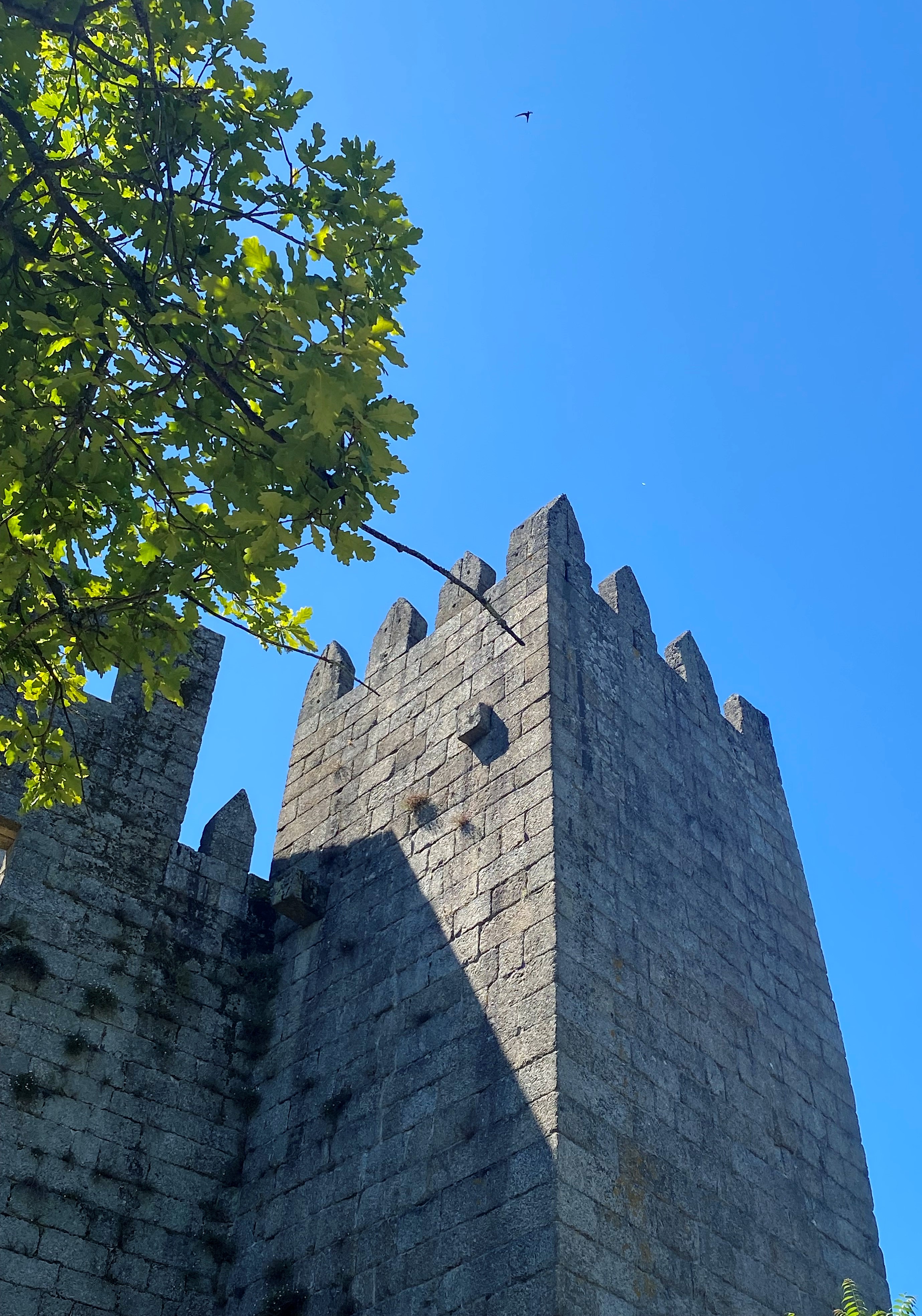
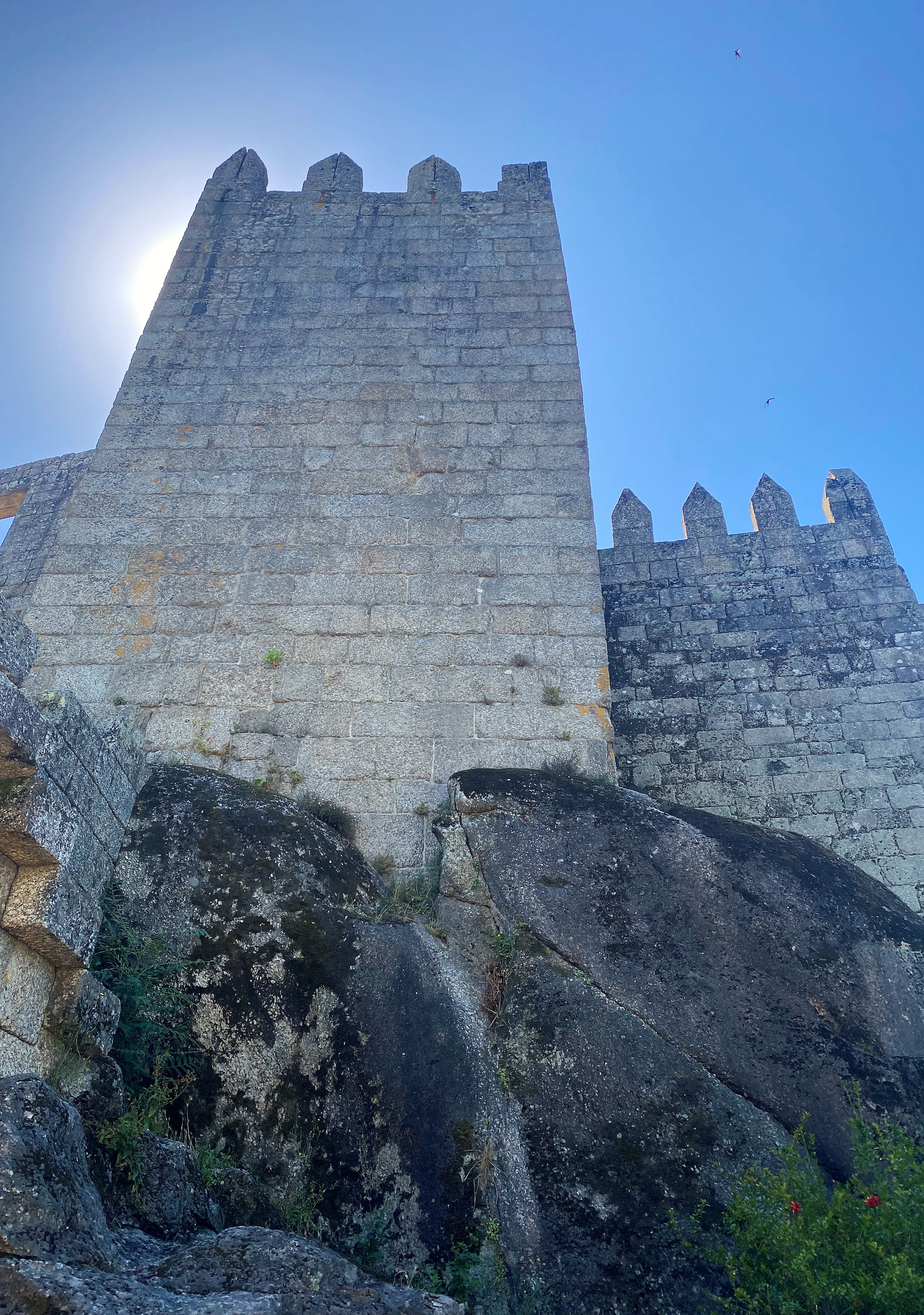
Our next stop was Guimaraes, another UNESCO World Heritage Site. We spent several hours on the grounds of Guimaraes Castle, the place where the first King of Portugal, Afonso Henriques (1109-1185) was born. Construction began in the mid-10th century. Obviously, it has had a few renovations since then.


We walked past it on the right side . . . 

. . . admiring its square, crenellated tower and the way it is literally built into the rocks.

Tuesday, November 8, 2022

PORTUGAL: PORTO, PART 1 -- SAO BENTO TRAIN STATION, PALACIO DA BOLSA, IGREJA DE SAO FRANCISCO

 Tuesday, June 28, 2022

We got up early and drove just under two hours to Porto, a city I was very excited about. According to many sites, it is loaded with interesting things to see and one of the best places to visit in Portugal.

However, once we got to the city, it took us almost two hours to get to our hotel because of construction in the area. We called the hotel twice for advice for how to get there because our GPS kept sending us to the construction zone and blocked streets. When we finally found a way around the mess, we had to park our car several blocks from the hotel in a parking garage. 

The street on the left (as seen from our hotel room) is the way GPS really wanted us to access the hotel, but the street on the right is the way we were finally able to come in. It was blocked off to cars, but they let us in to unload and then sent us away to park.

And then Bob forgot to grab his camera, and I left my sweater, and we our nerves were already frayed by the driving, and both of us were unhappy.

The huge delay meant that we got to the first place on our list 2.5 hours behind schedule, and it felt like we were playing catch-up all day, speeding from venue to venue. It was a great disappointment for me. Porto is a city where "meandering" would be fun. We did very little of that.

However, the very first place we took a look at was NOT on the schedule--the São Bento (St. Benedict) Train Station, built in the early 1900s. About 20,000 exquisite azulejos cover the walls and are topped by a border of polychromatic tiles. Together they tell the story of Portugal's past.